Calculate Cost Per Wear: Uncovering the True Value of Your Wardrobe
- What is Cost Per Wear (CPW) and Why Does It Matter?
- Why Traditional Pricing Fails Us
- Setting Up the Audit: Tracking the Data
- Establishing Usage Metrics
- Initial Baseline: The Shockers
- The 90-Day Active Calculation Phase
- Revelation 1: The True Value of Core Wardrobe Items
- Revelation 2: The Hidden Cost of Hobbies and “Aspirational” Purchases
- Revelation 3: The Time Factor in Service-Based Purchases
- Translating CPW into Purchasing Strategy
- 1. Prioritize Investment in High-Frequency Items
- 2. Increase the Usage Threshold for Lower-Frequency Items
- 3. The “Cost to Keep Storing” Metric
- Conclusion: Value is a Moving Target
The True Cost of Ownership: I Calculated the Cost Per Wear of Everything I Own
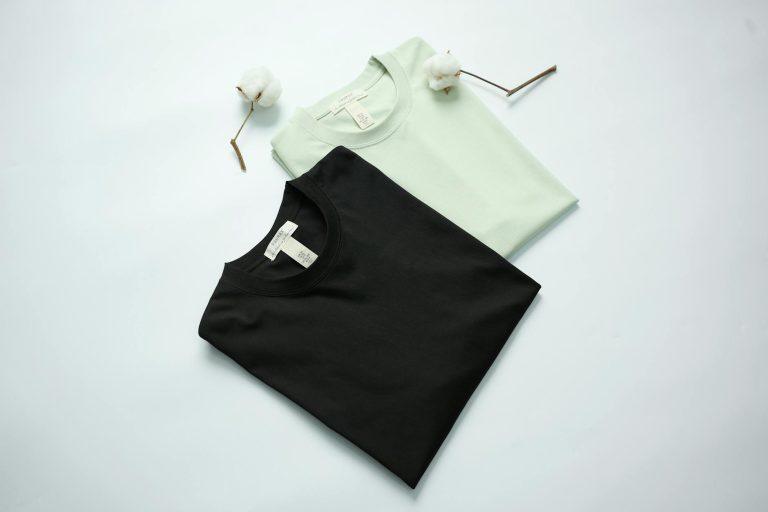
We constantly hear the mantra: buy less, buy better. But what does “better” truly mean when money is concerned? Is that $50 t-shirt failing after three washes genuinely cheaper than a $150 organic cotton equivalent that lasts five years?
To move beyond vague theories and understand the real, tangible financial impact of my purchasing decisions, I embarked on a meticulous, slightly obsessive 90-day audit of my entire wardrobe, toolbox, and bookshelf. I intended to calculate the true metric of value: the Cost Per Wear (CPW).
This is the mathematical reckoning of what it actually costs to use what you own, and the surprising revelations it unearthed about my priorities, my habits, and the hidden expenses of disposable culture.
What is Cost Per Wear (CPW) and Why Does It Matter?
Cost Per Wear is a surprisingly simple calculation that transforms the upfront sticker price of an item into its actual financial burden over time.
The Formula:
$$text{Cost Per Wear (CPW)} = frac{text{Initial Purchase Price}}{text{Number of Times Used (or Worn)}}$$
The beauty of CPW lies in its ability to flip the value proposition completely. A $1,000 winter coat worn 300 times over ten years has a CPW of approximately $3.33 per use—a bargain compared to a $50 fast-fashion piece worn only five times before it degrades (CPW of $10).
Why Traditional Pricing Fails Us
Standard pricing only tells you the cost of acquisition, not ownership. It encourages us to choose the low initial price without considering longevity, material quality, or utility.
- The “Good Enough” Trap: Buying a cheap tool for a one-time job seems practical, but if you own 20 such tools that eventually need replacing, the accumulated cost far outstrips a single, high-quality investment piece.
- Emotional Attachment vs. Financial Return: We often keep items we never use (the dreaded “closet tax”), inflating their perceived CPW toward infinity—meaning you paid full price just to store them.
Setting Up the Audit: Tracking the Data
To make this meaningful, I needed consistency and commitment. I established a baseline tracking system focused on three primary categories where I felt I had the most significant spending leakage: Clothing, Footwear, and Tools/Gear.
Establishing Usage Metrics
This was the most challenging part. How do you accurately count the usage of everyday items?
- Clothing & Footwear: Usage was counted as one “wear.” If I wore a pair of shoes to the office and then to dinner, it still counted as one wear cycle.
- Tools & Gear (e.g., Kitchenware, Cameras, Bags): Usage was counted based on meaningful deployment. Opening a specific drill bit once counted as a use. Taking a camera bag on a weekend trip counted as one use, regardless of how many photos were taken.
I implemented a simple digital spreadsheet, logging the item, purchase price, date purchased, and the date of use. Crucially, I was rigorous about logging items even if they weren’t worn on a given tracking day, noting their last recorded use to calculate current standing CPW.
Initial Baseline: The Shockers
Before I started actively tracking usage, I calculated the standing CPW for items I’d owned for several years but hadn’t worn recently.
| Item Category | Example Item | Initial Price | Last Use Date | Current Estimated Wears | Standing CPW |
|---|---|---|---|---|---|
| Clothing | Wool Blazer (Unworn Seasonally) | $350 | 14 Months Ago | N/A (Storage Cost) | $infty$ (If never used this year) |
| Footwear | Formal Leather Boots | $280 | 18 Months Ago | 12 | $23.33 |
| Gear | High-End Coffee Grinder | $400 | 2 Months Ago | 85 | $4.71 |
The infinity symbol for the unworn blazer highlighted the real problem: items that sit unused are essentially liabilities, taking up space and representing 100% of the initial cost without providing any return on investment.
The 90-Day Active Calculation Phase
For three months, every time I used a tracked item, I updated the formula. This forced me to consider the item before I chose it. Did I choose the quality jacket because it would provide a lower CPW over the next decade, or did I choose the trendy, cheaper one that would probably be discarded in a year?
Revelation 1: The True Value of Core Wardrobe Items
The items that achieved the best CPW were consistently those I invested in heavily several years prior—provided they were timeless and high-quality.
- The $400 Minimalist Leather Bag: Worn almost daily for four years (estimated 700 wears). CPW: $0.57. This was my rock star item. It replaced four cheaper, trend-driven bags that broke or looked dated.
- The $220 Selvedge Denim Jeans: Worn heavily for three years (estimated 150 wears). CPW: $1.47. Compare this to $40 jeans that stretch out after 10 washes and are discarded, costing $4.00 CPW over the same period.
The lesson here wasn’t just “buy quality”; it was “buy quality in versatile essentials.” Quality in a neon green sequin top might not pay off, regardless of material.
Revelation 2: The Hidden Cost of Hobbies and “Aspirational” Purchases
My gear closet proved to be a graveyard of good intentions.
I purchased a professional-grade portable lighting setup for photography two years ago ($550). I used it twice.
- Initial CPW (Post 2 Uses): $275.00.
This steep CPW prompted me to actually integrate the gear. I scheduled two personal projects specifically to drive that number down. While the CPW is still high, the act of tracking encouraged usage, transforming a static expense into an active tool.
Revelation 3: The Time Factor in Service-Based Purchases
For items that are maintained (like shoes or specialized outdoor equipment), the CPW calculation must become slightly more sophisticated, incorporating maintenance costs or professional lifespan estimates.
I had a pair of high-quality hiking boots that cost $320. They required $50 resoling after 300 hard miles.
- Initial Cost: $320
- Maintenance Cost (first re-sole): $50
- Total Investment: $370
- Estimated Lifetime Usage: 100 Hikes (Total number of times worn for that specific activity)
If I achieve 100 uses before needing major repair: CPW: $3.70 per hike. If I had bought cheaper boots that died after 20 hikes, the CPW is $16.00. The initial high investment is amortized over a much longer functional service life.
Translating CPW into Purchasing Strategy
Calculating CPW isn’t about guilt; it’s about optimization. By the end of the tracking period, my perspective on spending fundamentally shifted.
1. Prioritize Investment in High-Frequency Items
If you use something more than 100 times a year (daily work shoes, core outerwear, your primary backpack), that is where quality matters most. Spend the extra money here, as the CPW will drop rapidly into pennies.
2. Increase the Usage Threshold for Lower-Frequency Items
For items worn infrequently (formal wear, seasonal sports equipment, specialized kitchen gadgets), demand exceptional longevity or significant emotional joy to justify the purchase. If you only wear a tuxedo once every five years, the CPW will always be high. You must be certain that the rental cost of alternatives or the sheer utility/joy outweighs that initial high barrier.
3. The “Cost to Keep Storing” Metric
For every item that falls below a specified “Usage Threshold” (I chose 10 uses in the last year), I mentally assigned it a “Storage Tax”—the opportunity cost of the space it occupies. If I couldn’t visualize a clear path to using it 10 more times in the next year, it was flagged for donation or resale. This successfully cleared out nearly 20% of my underutilized possessions.
Conclusion: Value is a Moving Target
Calculating the Cost Per Wear of my possessions was a profound exercise in financial transparency. It stripped away the appealing simplicity of the initial price tag and revealed the actual return on investment for every object I brought into my life.
The major takeaway is that value is not static; it is accrual. A product’s value increases every time it is used, while its price remains fixed. Conversely, an unused, high-end item depreciates quickly into a storage liability.
While I certainly still buy cheaper items for one-off needs, my core philosophy now centers on ensuring that the things I use daily—my foundational wardrobe, my most important tools—are built to withstand the rigors of frequent use, consistently driving their CPW towards the lowest possible number. The goal isn’t simply to spend less; it’s to ensure that every dollar spent delivers maximum utility over time.