Expensive Shoes: Are High-Quality Footwear Truly Cheaper?
- The Hidden Cost of “Cheap” Footwear
- Inferior Materials and Construction
- Lifespan Comparison: The Replacement Trap
- The Ergonomic Argument: Investing in Your Body
- Support and Posture
- The “Break-In” Myth vs. Custom Fit
- Maintenance and Repairability: The Circular Economy of Quality
- Resole vs. Replace
- Maintenance as an Investment
- The Psychological and Professional Edge
- Confidence and Presence
- Reduced Decision Fatigue
- Conclusion: Shifting to the Cost-Per-Wear Mentality
Why Expensive Shoes Are Actually Cheaper in the Long Run
In the age of fast fashion, where a trend can sprout and die within a single season, the temptation to opt for the brightly colored, deeply discounted footwear can be strong. We often equate a lower upfront price with savings. However, when we look beyond the immediate transaction and factor in durability, comfort, maintenance, and replacement cycles, the narrative shifts entirely. The premium price tag on high-quality, expensive shoes often masks a far more cost-effective reality over the long haul.
This isn’t about buying the most expensive shoe on the shelf; it’s about understanding the true cost of ownership. By investing wisely in quality construction and superior materials now, you can sidestep the endless cycle of replacement, saving your wallet, your time, and your feet from unnecessary stress.
The Hidden Cost of “Cheap” Footwear
The sticker price of budget shoes is deceptively low because manufacturers often cut costs in areas that the consumer won’t notice immediately—until it’s too late. These corners cut add up quickly in terms of replacement frequency and quality of life impact.
Inferior Materials and Construction
The most significant difference between an inexpensive shoe and a premium one lies in material quality and manufacturing integrity.
- Uppers: Cheap shoes typically use synthetic leathers or low-grade plastics that crack, peel, and fade rapidly when exposed to regular wear, water, or temperature changes. High-quality shoes utilize full-grain leather, durable textiles, or high-performance synthetics designed to patinate gracefully or withstand rugged use.
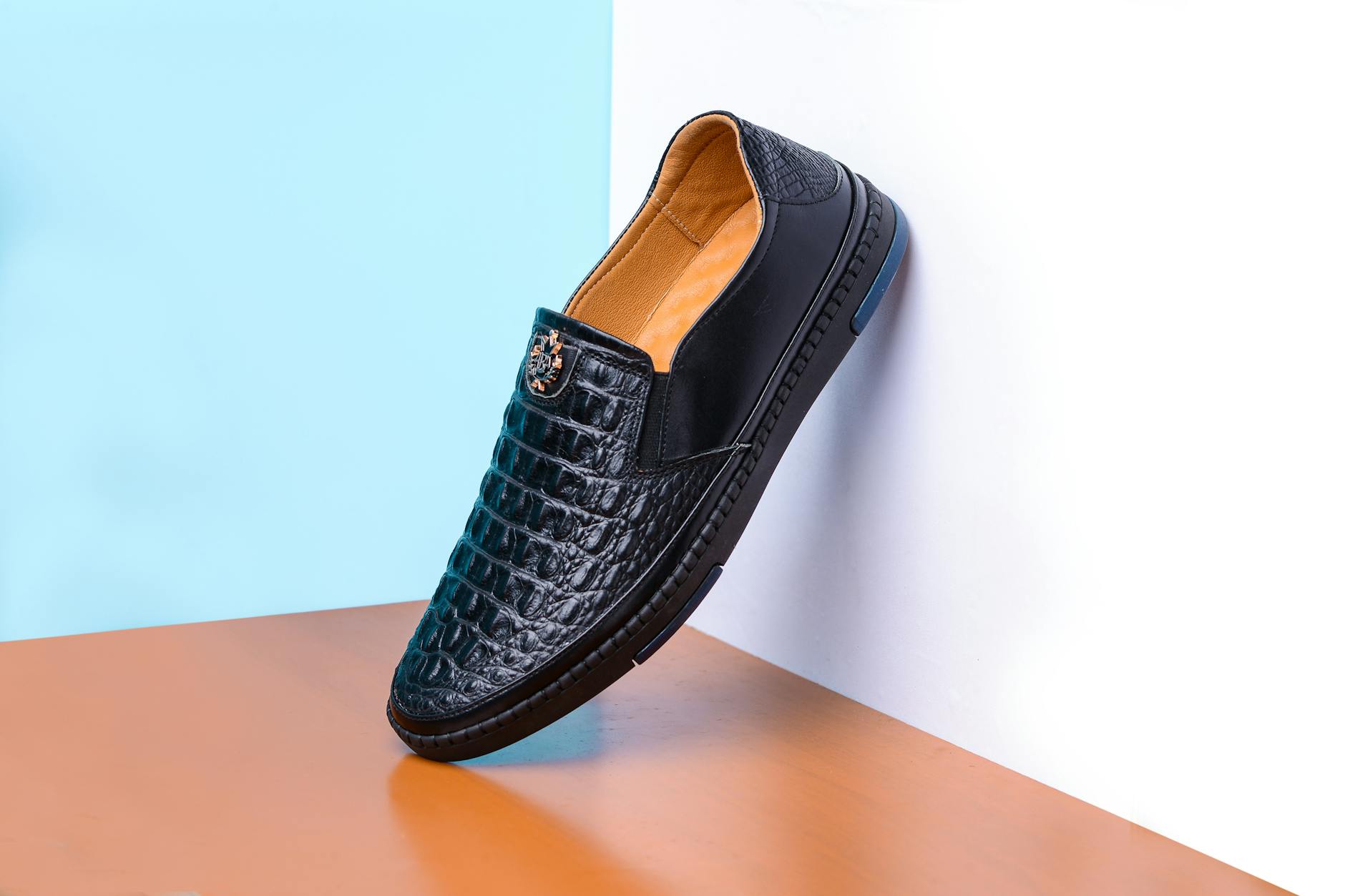
- Soles: Inexpensive outsoles are frequently made from cheap rubber composites that wear down quickly, often needing replacement after a single season of heavy use, especially for dress shoes or work boots. Premium soles (like Vibram or high-density Goodyear welts) are designed for longevity and can often be replaced numerous times.
- Adhesives vs. Stitching: Budget shoes often rely heavily on glue to hold the sole to the upper. When this glue fails (and it usually does), the shoe is essentially garbage. Quality footwear utilizes robust stitching methods like Goodyear welting, Blake stitching, or cemented construction built to last decades.
Lifespan Comparison: The Replacement Trap
Consider a scenario where a consumer buys a pair of shoes for $75 annually because they fall apart—the soles crack, the stitching gives out, or the material disintegrates. Over a total lifespan of ten years, that consumer has spent $750.
Now consider a pair of quality leather dress shoes purchased for $350. If these shoes are well-maintained, stitched properly, and resoled twice over the same ten-year period (an average resoling cost might be $80–$120 per service), the total expenditure looks like this:
- Initial Cost: $350
- Resole 1: $100
- Resole 2: $100
- Total Over 10 Years: $550
In this direct comparison, the expensive shoe, despite the higher initial outlay, still saves the consumer $190 over a decade, assuming the low-cost shoe needs replacement every year. If the high-quality shoe lasts 15 years before it truly fails, the savings become even more substantial.
The Ergonomic Argument: Investing in Your Body
Beyond mere material costs, the true price of cheap shoes is paid by your body. Feet are the foundation upon which our entire structure rests. Chronically ill-fitting or poorly supported footwear can lead to musculoskeletal issues that far outstrip the initial savings on a pair of shoes.
Support and Posture
Expensive, well-engineered shoes (whether they are work boots, running shoes, or dress shoes) incorporate superior arch support, proper heel cradling, and quality cushioning systems.
- Reduced Strain: Good support ensures that your gait is aligned properly, reducing strain on your knees, hips, and lower back. Over time, avoiding these chronic alignment issues can prevent costly physical therapy, chiropractic visits, or even surgery.
- Comfort Equals Productivity: If you spend all day on your feet, comfortable, supportive shoes allow you to work longer, more productively, and with less fatigue. This improved well-being translates into tangible benefits that low-cost shoes actively detract from.
The “Break-In” Myth vs. Custom Fit
While many high-quality leather shoes require a break-in period, this process is about the material molding to your specific foot shape. Once broken in, the shoe offers a semi-custom fit, providing ongoing comfort.
Cheap shoes often feel fine for the first hour because they offer no structural support at all. They prioritize immediate, temporary comfort over long-term anatomical correctness.
Maintenance and Repairability: The Circular Economy of Quality
One of the most compelling arguments for expensive footwear is that they are designed to be serviced, not simply discarded. This dedication to repairability is the bedrock of long-term value.
Resole vs. Replace
When the sole of a well-made shoe wears down, a cobbler can meticulously remove the old unit and attach a brand-new one. This process preserves the high-quality upper leather and the customized fit developed over time.
Key Repairable Elements in Quality Shoes:
- The Sole: Can be replaced several times (often with better rubber compound than the original).
- The Heel Stack: Rubber top-lifts can be replaced frequently at minimal cost.
- The Welt: If a Goodyear welt is damaged, it can sometimes be completely replaced, breathing new life into the structure of the shoe.
- Conditioning: Premium leather can be professionally cleaned, reconditioned, and polished indefinitely, preventing drying and cracking.
Conversely, when the sole of a glued, fast-fashion shoe fails, the entire unit is usually thrown away, forcing the consumer back to the beginning of the replacement cycle.
Maintenance as an Investment
Caring for quality shoes—conditioning leather, polishing, and using cedar shoe trees—is an investment of time that pays dividends in longevity. A $5 polishing kit and shoe trees extend the life of a $400 pair of boots by years, maximizing the return on that initial investment. The time spent polishing quality leather feels less like a chore and more like tending to a valuable asset.
The Psychological and Professional Edge
While harder to quantify in dollars and cents, the psychological impact and professional presentation afforded by quality footwear cannot be overlooked.
Confidence and Presence
When you wear shoes that fit perfectly, are well-maintained, and project an image of quality, it subtly influences how you carry yourself. In professional settings, footwear is often the first detail people notice. Showing up in shoes that are falling apart, scuffed beyond repair, or obviously cheap can unintentionally signal a lack of attention to detail or financial instability.
High-quality shoes project competence and seriousness. This subtle “uniform advantage” can influence everything from closing a deal to making a positive first impression.
Reduced Decision Fatigue
When you invest heavily in a core wardrobe of quality shoes—a few pairs of versatile, durable staples—you reduce the mental energy spent on daily wardrobe decisions. You know your premium black leather shoes will look professional for any meeting, just as your premium hiking boots will handle the trail without fail. Quantity replaces quality when you’re chasing trends; quality allows for mindful simplicity.
Conclusion: Shifting to the Cost-Per-Wear Mentality
The fundamental shift required to see why expensive shoes are cheaper in the long run is adopting the Cost-Per-Wear (CPW) metric instead of the initial purchase price.
$$
text{Cost Per Wear (CPW)} = frac{text{Total Cost (Purchase + Repairs)}}{text{Number of Times Worn}}
$$
If a $100 pair of shoes lasts 50 wears before disposal, the CPW is $2.00. If a $400 pair of shoes, maintained and resoled, lasts 500 wears over five years, the CPW is $0.80.
By prioritizing durability, repairability, and anatomical support during the initial purchase, we move away from the trap of disposable goods. While the cash output is higher today, the reduced frequency of replacement, the savings on future medical bills, and the enhanced daily comfort make the premium shoe the undeniable financial winner in the long run. Investing in quality footwear isn’t an extravagance; it’s an exercise in financial prudence for your feet and your future self.