
One Year of Fashion Tracking: Shocking Spending Results Revealed
- Setting Up the Fashion Audit: Methodology and Milestones
- The First Hurdle: Confronting Small Purchases
- Shocking Result 1: The True Cost of “Bargains”
- Shocking Result 2: The “Cost Per Wear” Catastrophe
- The High Performers (The Winners)
- The Dead Weight (The Losers)
- Shocking Result 3: The Emotional Shopping Triggers
- 1. The “I Need A Uniform” Fallacy
- 2. The Revenge Splurge
- 3. Post-Holiday Depletion
- Implementing Change: The Post-Audit Strategy
- Shift 1: Prioritizing CPW Over Initial Price
- Shift 2: The “Three-Item Rule” for Any Category
- Shift 3: Separating Emotional Shopping from Intentional Shopping
- Conclusion
I Tracked Every Fashion Purchase for a Year: Shocking Results
We all have a complicated relationship with our closets. One moment, it’s a source of endless inspiration and confidence; the next, it’s a source of overwhelming clutter and buyer’s remorse. For years, I floated in that middle ground—buying things impulsively, donating others without a second thought, and constantly feeling like I had “nothing to wear” despite overflowing drawers.
As a self-proclaimed recovering impulse shopper, I decided to conduct a year-long social experiment on myself: radical transparency in fashion consumption. I wasn’t aiming for a no-buy year—that felt too restrictive and unrealistic for my lifestyle. Instead, I aimed for total awareness. I tracked every single fashion purchase, no matter how small, between January 1st and December 31st.
The spreadsheet became my confessional. Six months in, I started noticing patterns I had successfully ignored for years. By the end of the year, the data provided shocking, undeniable truths about my spending habits, my emotional triggers, and the real cost of keeping up with fleeting trends.
This is what I learned when I quantified my closet over 365 days.
Setting Up the Fashion Audit: Methodology and Milestones

The goal was simple: record every item of clothing, footwear, accessory, or jewelry that entered my home with the intention of being worn. Excluding gifts and necessary replacements (like worn-out socks), this was purely discretionary expenditure.
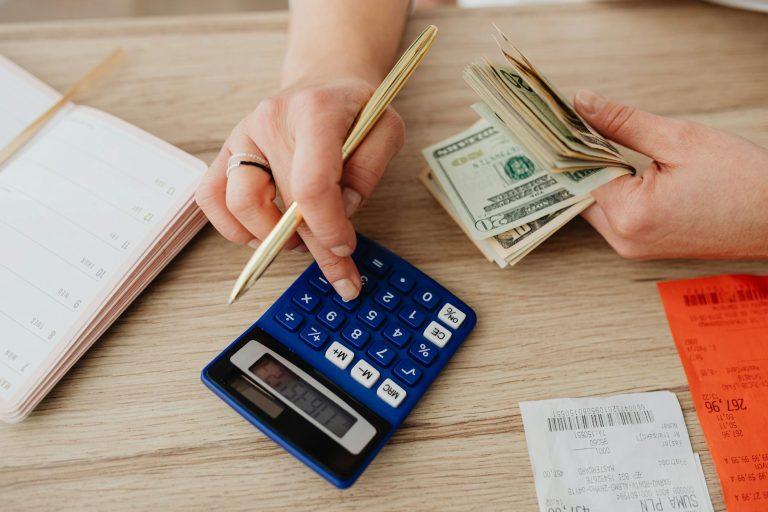
My tracking system was a rigorously maintained spreadsheet with the following required fields for every entry:
- Date of Purchase: When the transaction occurred.
- Item Category: (e.g., Tops, Outerwear, Denim, Shoes, Jewelry).
- Brand/Retailer: Where it was purchased.
- Price (USD): The exact cost, including tax if possible.
- Motivation/Trigger: Crucially, why I bought it (e.g., Sale hunt, Replacement, Trend adoption, Emotional purchase, Necessary for an event).
- Cost Per Wear (CPW) Tracker: Updated weekly based on how often I wore it.
The First Hurdle: Confronting Small Purchases
The first month was painfully illuminating. I had anticipated that the big ticket items (like a winter coat or new boots) would dominate the spending, but I was completely wrong. The sneaky killers were the $20 t-shirts, the $45 fast-fashion blouse, and the novelty accessories.
I realized I had developed a habit of rewarding myself for mundane achievements with small fashion treats. Finishing a tough work week? A new top. Seeing an Instagram ad? A pair of earrings. These “little treats” added up to a staggering $450 in minor category spending by the end of Q1 alone—the equivalent of one high-quality sweater.
Shocking Result 1: The True Cost of “Bargains”
The most significant revelation came when I analyzed the Motivation/Trigger column against the Price column. My internal justification for most purchases was “it was a bargain.”
| Motivation Trigger | Total Number of Items | Total Spend on These Items | Average Price Paid |
|---|---|---|---|
| Genuine Need/Replacement | 8 | $780 | $97.50 |
| Sale/Deep Discount Hunting | 21 | $615 | $29.28 |
| Impulse/Emotional Buy | 14 | $490 | $35.00 |
| Trend Following | 5 | $310 | $62.00 |
The data clearly showed that I purchased far more items driven purely by the illusion of a deal. I bought 21 items because they were marked down, yet these represented some of the least-worn pieces in my closet by year-end. A perfectly good dress I already owned remained unworn because I found a “better” deal on a similar, trendy silhouette.
The realization: I wasn’t saving money; I was just exchanging money for things I didn’t genuinely want or need, packaged as financial victory. The total spend on discounted items was nearly as high as the amount I spent on items I actually needed.
Shocking Result 2: The “Cost Per Wear” Catastrophe
This metric was the true judge. At the end of the year, I calculated the final CPW for all 53 tracked items. An item needed to be worn at least 10 times to be considered “cost-effective” in my personal metric.
The High Performers (The Winners)
The items with the lowest CPW deserved their place. They were almost exclusively foundational pieces bought with intention, often at higher initial prices:
- The Black Wool Coat: Purchased for $350, worn 95 traceable times. CPW: $3.68.
- The Perfect-Fit Dark Wash Jeans: Purchased for $145, worn 70 traceable times. CPW: $2.07.
- Quality Leather Boots: The most expensive item at $280, worn 60 traceable times. CPW: $4.67.
These items proved that high initial investment coupled with timeless style translates into genuine cost savings and wardrobe utility.
The Dead Weight (The Losers)
The majority of my purchases fell into the “dead weight” category, rarely breaking past a CPW of $20.
- The Lime Green Slip Skirt: Worn once for an event, removed from rotation. CPW: $88.00.
- The “Trendy” Cropped Cardigan: Purchased on sale, worn twice before the trend died. CPW: $48.50.
- The Impulse Blouse: Bought because I liked the color in the store light, never matched the rest of my wardrobe. Worn zero times. CPW: Infinite.
The existence of several items with a CPW greater than $50 was deeply unsettling. I had spent significant money to own things that provided zero value or enjoyment over 12 months.
Shocking Result 3: The Emotional Shopping Triggers
The “Motivation/Trigger” field revealed a clear link between my emotional state and my purchasing habits. I identified three primary emotional anchors for consumption:
1. The “I Need A Uniform” Fallacy
When I felt overwhelmed by work or life stress, I would declare, “I need a work uniform,” leading to the purchase of multiple similar button-down shirts or basic trousers. I bought 11 new basic tops because I felt my existing ones didn’t project the right professional image. Yet, because the new items were subtly different (different fabric blends, slightly different necklines), they never truly harmonized, creating more outfit fatigue instead of solving it.
2. The Revenge Splurge
If I had a confrontation or experienced professional rejection, I would shop as a form of self-soothing. This often resulted in highly specific, slightly erratic purchases—a brightly colored accessory or an impractical piece of jewelry—that did not fit my existing aesthetic.
3. Post-Holiday Depletion
The quiet week after major holidays, where social life and excitement level dropped, always triggered online shopping sprees, often focusing on brightly colored recreational wear, even though my actual activity level remained low.
Implementing Change: The Post-Audit Strategy
By the time the year concluded, I had purchased 53 items totaling $2,875 USD. While this isn’t an astronomical figure for a year of fashion spending, the sheer volume and the low utility of those purchases screamed for a systematic overhaul.
My takeaway wasn’t to stop buying clothes entirely, but to redefine what I buy and why.
Shift 1: Prioritizing CPW Over Initial Price
Moving forward, I adopted a minimum CPW baseline. If I estimate an item won’t be worn at least 20 times in the first year, I will not buy it, regardless of the sale price. This immediately filters out trend-chasing impulse buys.
Shift 2: The “Three-Item Rule” for Any Category
To combat the over-saturation in “basics,” I implemented a hard limit: I can only purchase three items within any single category (e.g., T-shirts, Knitwear) in a six-month window. If I want item number four, I must first list one older item of that type for donation or sale.
Shift 3: Separating Emotional Shopping from Intentional Shopping
When an emotional trigger arises, the rule is now: browse freely, but add to a 72-hour waiting list. If the item still feels essential after three days—and it meets the CPW criteria—I consider the purchase. If the desire fades, the list serves as a reminder of what moods were influencing me.
Conclusion
Tracking every fashion purchase for a year was more than a budgeting exercise; it was a deep dive into my consumer psychology. I discovered that most of my spending was driven by an effort to solve emotional voids or chase the illusion of savings, rather than building a wardrobe I loved.
The real luxury isn’t buying more; it’s buying better. The goal now is not to have a smaller closet (though that is a welcome side effect), but to have a closet where every single item carries its weight, offers utility, and sparks genuine joy. The numbers don’t lie: only intentional, high-quality purchases earn their permanent residence.